
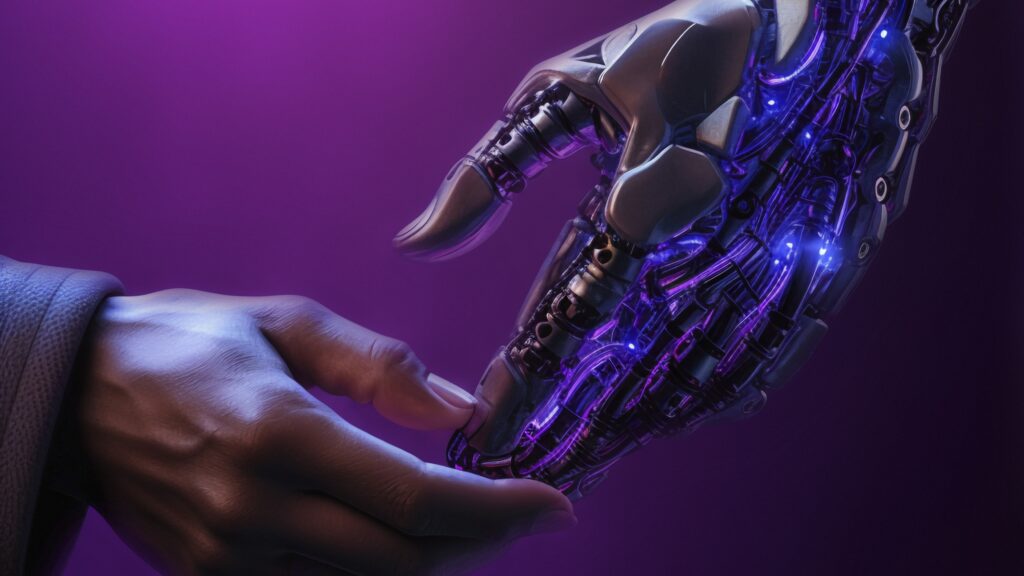
Artificial intelligence is commonly known as AI. One of the fast growing fields in technology. It uses data, logic and patterns to solve problems, understand language,recognize images etc. artificial intelligence is the ability of a machine or computer program to think,learn and make decisions like a human being.
AI is used in many everyday applications, such as virtual assistants, recommendation systems, self-driving cars, and medical diagnosis tools.
AI is used in many everyday applications, such as virtual assistants, recommendation systems, self-driving cars,and medical diagnosis tools. It mainly relies on techniques like machine learning, where computers improve their performance through experience, and natural language processing, which allows machines to understand and generate human language.
TOP AI SKILLS FOR FUTURE
Machine Learning :Machine learning is the foundation of AI, focusing on algorithms that allow computers to learn from data and improve over time without being explicitly programmed. Understanding concepts like supervised, unsupervised, and reinforcement learning is essential, as they are widely used in everything from recommendation systems to predictive analytics.
Deep Learning : Deep Learning is a branch of machine learning that uses multi-layered neural networks to analyze and learn from large amounts of data. It is especially effective for tasks like image recognition, speech processing, and natural language understanding. Deep learning mimics how the human brain works and powers many advanced AI applications, including virtual assistants, self-driving cars, and chatbots.
Neural Networks:Neural networks are computational models inspired by the human brain’s structure, designed to recognize patterns and make decisions based on data. They consist of interconnected layers of nodes, or “neurons,” each performing simple computations. Information flows from the input layer through hidden layers to the output layer, with each connection having an associated weight that adjusts during training to minimize prediction errors.
Computer Vision: Computer Vision is a field of Artificial Intelligence that enables machines to interpret and understand the visual world. By processing and analyzing images and videos, computer vision systems can perform tasks such as object detection, facial recognition, and scene reconstruction.
Reinforcement Learning :Reinforcement Learning is a type of machine learning where an agent learns to make decisions by performing actions in an environment to achieve a goal. Unlike supervised learning, where the model is trained on labeled data, RL involves learning from the consequences of actions through trial and error. The agent receives feedback in the form of rewards or penalties, guiding it to optimize its behavior over time.
AI AND THE JOB MARKETING
Automation and Efficiency
AI excels at automating repetitive tasks such as data analysis, content creation, and customer segmentation. This automation increases efficiency but may reduce the demand for roles focused on these tasks. For instance, AI-driven tools can analyze consumer behavior patterns and generate insights in real-time, reducing the need for manual data crunching jobs
Emerging of New Roles
AI Marketing Strategist: Develops strategies that integrate AI technologies to enhance marketing efforts.
Predictive Analyst: Utilizes AI to analyze and forecast consumer behavior and market trends.
Chatbot Developer: Specializes in creating and optimizing AI-driven chatbots for customer interaction.
AI Ethicist: Ensures ethical considerations are addressed in AI implementations.
BENEFITS OF AI
Improved Decision: AI analyzes complex data to uncover patterns and insights, aiding in more informed and accurate decision-making processes in fields like healthcare, finance, and marketing.
Enhanced Efficiency and Productivity: AI systems can automate repetitive tasks, process large datasets swiftly, and operate continuously without fatigue, leading to increased productivity and cost savings for businesses.
24/7 Availability: Unlike humans, AI systems can operate around the clock without the need for breaks or sleep. This continuous availability is particularly beneficial in industries like customer service, where AI chatbots can handle inquiries at any time, providing instant responses and improving customer experience .
Personalized Customer Experiences: By analyzing user data, AI can deliver tailored recommendations and services, enhancing customer satisfaction and engagement, and fostering stronger brand loyalty.
Cost Reduction:By automating tasks and optimizing processes, AI can lead to significant cost savings for businesses. For instance, predictive maintenance powered by AI can anticipate equipment failures before they occur, reducing downtime and repair costs. Additionally, AI’s efficiency in data processing can lower operational expenses .
RISK OF AI
Economic Inequality: The concentration of AI development among a few large corporations and governments can exacerbate economic disparities. Smaller businesses and developing nations may struggle to compete, leading to a widening wealth gap
Job Displacement: AI-driven automation threatens to replace jobs, particularly in sectors like manufacturing and customer service. While new roles may emerge, the transition could be challenging for workers lacking the necessary skills for these evolving positions.
Security Risks: AI systems can be vulnerable to cyberattacks, including adversarial attacks where malicious inputs deceive AI models. Such vulnerabilities can compromise the integrity of systems in critical areas like healthcare, finance, and transportation
CHALLENGES OF AI
Bias in AI Systems
The AI system gives unfair or incorrect results because it has learned from biased data.
Privacy and Data Security
Large data collection raises risks of misuse and data leaks.
Job Loss and Unemployment
Automation may replace many human jobs, especially in routine tasks.
Security Threats
AI can be used in harmful ways like deep fakes or cyberattacks.
Ethical and Legal Issues
No clear rules on who is responsible if AI causes harm.
Surveillance and Control
AI can be used by governments or corporations to monitor and control people, raising concerns about freedom and privacy.
THE FUTURE OF AI
The future of Artificial Intelligence (AI) is full of possibilities. AI will make our daily life easier with smart homes, self-driving cars, and faster services. In hospitals, AI can help doctors find and treat diseases quickly. It can also be used in schools, offices, and even farming. While some jobs may change because of AI, new types of jobs will also be created. People will need to learn new skills to work with AI. At the same time, it’s important to use AI safely and fairly, without harming people’s privacy or rights. In the coming years, AI and humans will work together to build a better and smarter world.
CONCLUSION
Artificial Intelligence is no longer a technology of the future—it is already shaping our present. From smart assistants and self-driving cars to healthcare tools and marketing strategies, AI is transforming every field. It brings many benefits such as better decision-making, cost savings, and personalized experiences, but it also comes with challenges like job loss, privacy risks, and ethical concerns. To face the future confidently, we must focus on responsible AI use, strong laws, and upskilling the workforce. With the right balance between innovation and ethics, AI has the power to create a smarter, safer, and more inclusive world where humans and machines work together for progress.